
Discover Tucumán by following the trails of Manuel Belgrano
Discover Tucumán by following the trails of Manuel Belgrano
"Caminos de Belgrano" (Belgrano's trails) invites you to discover the traces of this national hero in Tucumán and explore the settings that shaped his life and his role in the struggle for independence.
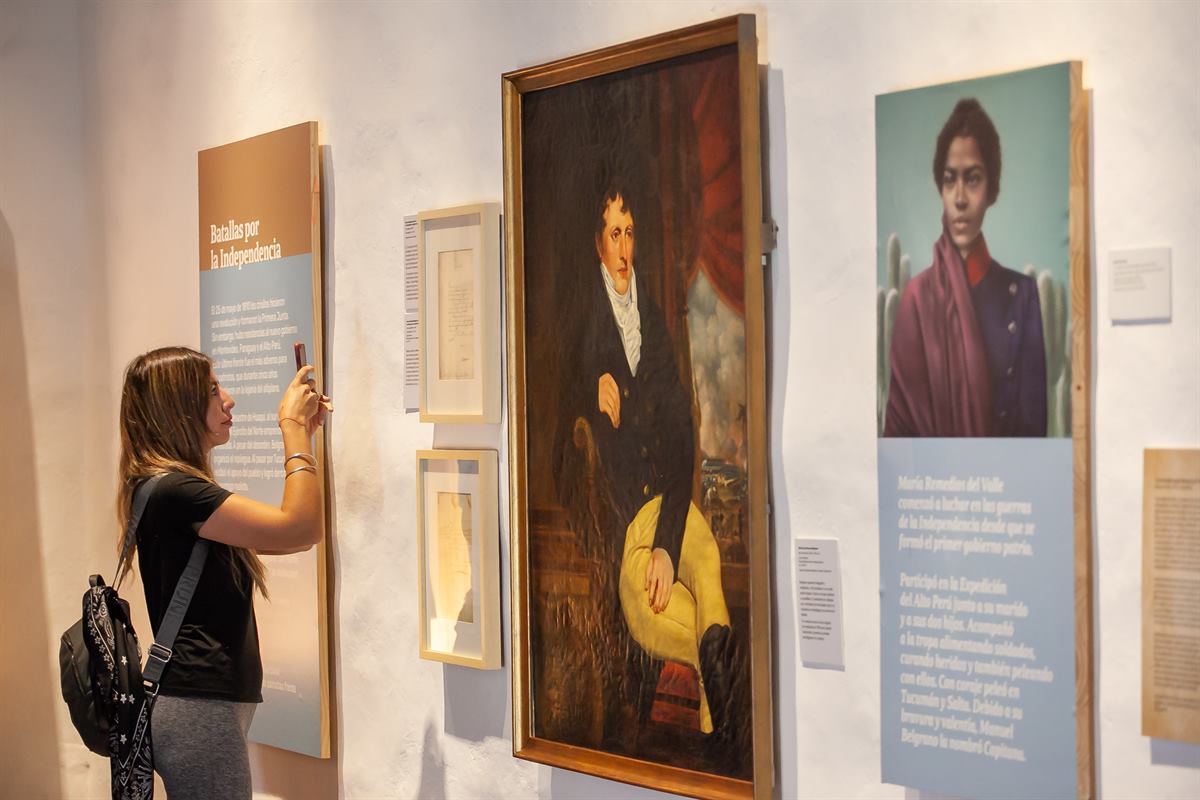
There are many reasons to choose a tourist destination: resting and relaxing in idyllic landscapes, experiencing adventures in contact with nature, or discovering new cultures. However, there is also another motivation: traveling to get a close look at the places where some of the events that shaped our history took place.
In this sense, historical-cultural tourism offers an experience that goes beyond visiting monuments and iconic buildings: it invites travelers to discover heritage, reclaim memory, and get closer to the figures and events that gave each place its identity.
With this approach, Caminos de Belgrano (Belgrano's Trails) is presented as a new tourism product in Tucumán that allows visitors to tour the sites linked to the life and work of the national hero, and to learn about the fundamental role the province played during one of the most momentous periods in Argentine history.
A Bit of History
Manuel José Joaquín del Corazón de Jesús Belgrano was born on June 3, 1770, in Buenos Aires. A lawyer, economist, journalist, politician, military leader, and diplomat, he was one of the central figures in the emancipation process of the United Provinces of the Río de la Plata.
His commitment to the independence cause led him to play a leading role in the wars against royalist armies. As General of the Army of the North, he led the second expedition to Upper Peru and spearheaded two decisive events in the country's history: the Jujuy Exodus in 1812, and the victories at the Battles of Tucumán and Salta, which halted the royalist advance into the northwest.
His bond with Tucumán was especially marked by the triumph achieved on September 24, 1812—an event that changed the course of the independence campaign and turned the province into a foundational stage of our history.
Belgrano’s Footsteps in Tucumán
Manuel Belgrano’s time in Tucumán left a valuable historical legacy that can now be explored through various heritage sites.
One of the main stops on the tour is the Casa Belgraniana, a reconstruction of the house where the founding father lived during his stay in the province between 1816 and 1820. Built using period materials and construction techniques, it recreates that modest residence and offers an interpretive experience featuring touchscreens, informational panels, and audiovisual projections. It is located at 681 Bernabé Aráoz Street in San Miguel de Tucumán.
Just a few meters away is Plaza Belgrano, formerly known as Campo de las Carreras, the site of the Battle of Tucumán on September 24, 1812. The Pirámide de Chacabuco also stands there—a monument commissioned by Belgrano to honor the victory achieved by General José de San Martín in that battle.
Another must-see site is the Basilica of Our Lady of Mercy (Basílica Nuestra Señora de la Merced), located one block from Plaza Independencia. Before the Battle of Tucumán, Belgrano placed his troops under the protection of the Virgin, and after the victory, he handed her his command baton and proclaimed her General of the Army. Today, the church preserves the historic baton as well as the flags captured from royalist forces.
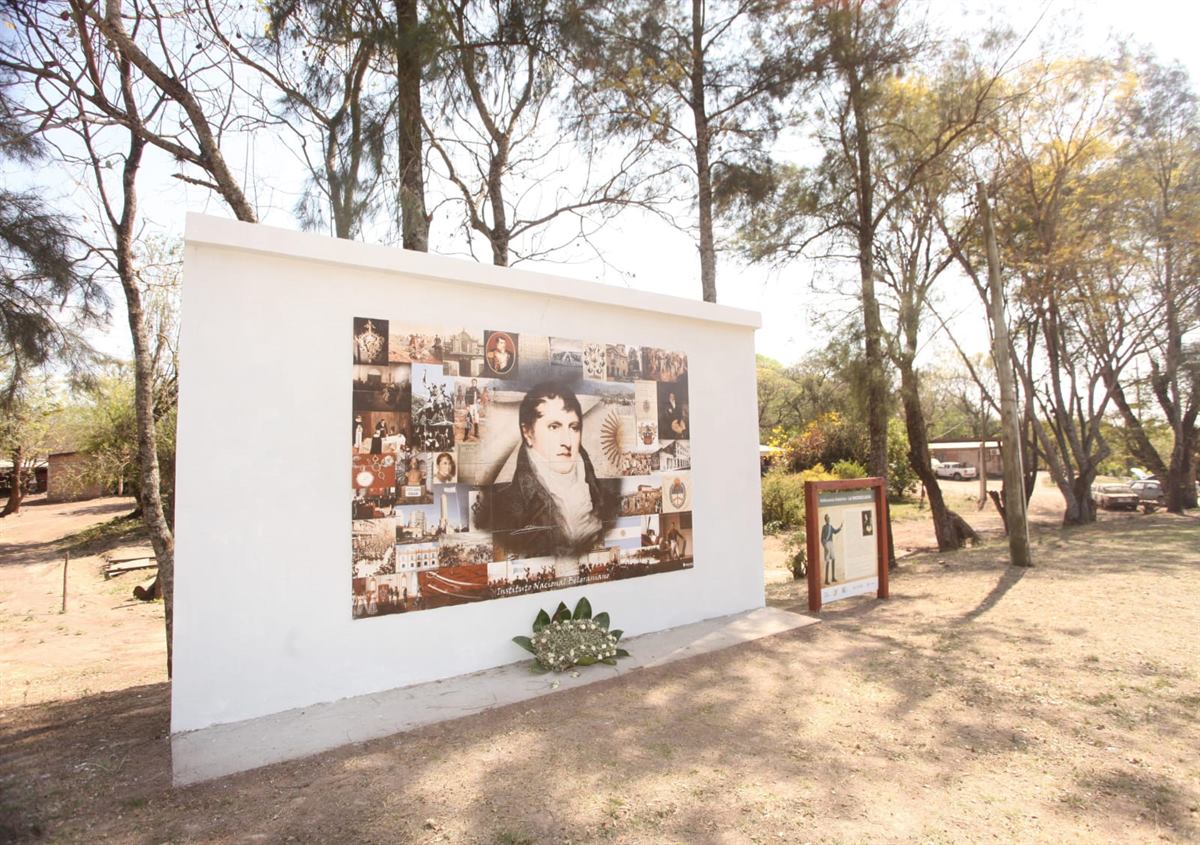
About 40 kilometers from the provincial capital, in the town of La Ramada (Burruyacu department), stands the La Encrucijada Monument. This site commemorates the meeting held between Manuel Belgrano and Bernabé Aráoz on September 10, 1812. During that meeting, Aráoz convinced the general to abandon his plan to retreat to Córdoba and instead stand and fight in Tucumán—a decision that would prove decisive for the future of the campaign.
The route also includes other religious buildings that played an important role during those years. The Church and Convent of San Francisco, recently reopened following restoration work, housed the Army of the North and served as a shelter and infirmary after the battle. Similarly, the Santo Domingo Church also served as a base of operations and a care facility for wounded soldiers.
In the north of the province, the Church of the Sacred Heart of Jesus (Iglesia del Sagrado Corazón de Jesús) in Trancas preserves another chapter of this history: it was there that Belgrano resumed command of the Army of the North on August 17, 1816.
An unmissable stop to complete this experience is the Historic House of Independence Museum (Museo Casa Histórica de la Independencia), the setting for the Argentine Declaration of Independence on July 9, 1816. Belgrano played a prominent role within the context of the Congress of Tucumán, where he presented his ideas on the political organization of the territory and defended the need to consolidate emancipation.
History, Flavors, and Traditions
This experience also allows visitors to combine historical heritage with other expressions of Tucumán’s identity. For those who enjoy regional cuisine and folk music, a great option is visiting Peña El Cardón, located at 60 Las Heras Street in San Miguel de Tucumán.
The old mansion, built in 1780, is part of the city's historical memory. Preparatory sessions for the Congress of 1816 were held there, and it served as a meeting place for figures such as Manuel Belgrano and José de San Martín, as well as Juan Bautista Alberdi in later years.
Thus, Caminos de Belgrano offers a different way to experience Tucumán: following in the footsteps of one of the great protagonists of our history, visiting the settings where the fate of independence was decided, and discovering, at every stop, a piece of Argentine identity.

