
Clay dreams: get to know Ramona Luna's ceramics workshop
Clay dreams: get to know Ramona Luna's ceramics workshop
The artisan from Tafí del Valle invites you to immerse yourself in her hand-molded world.
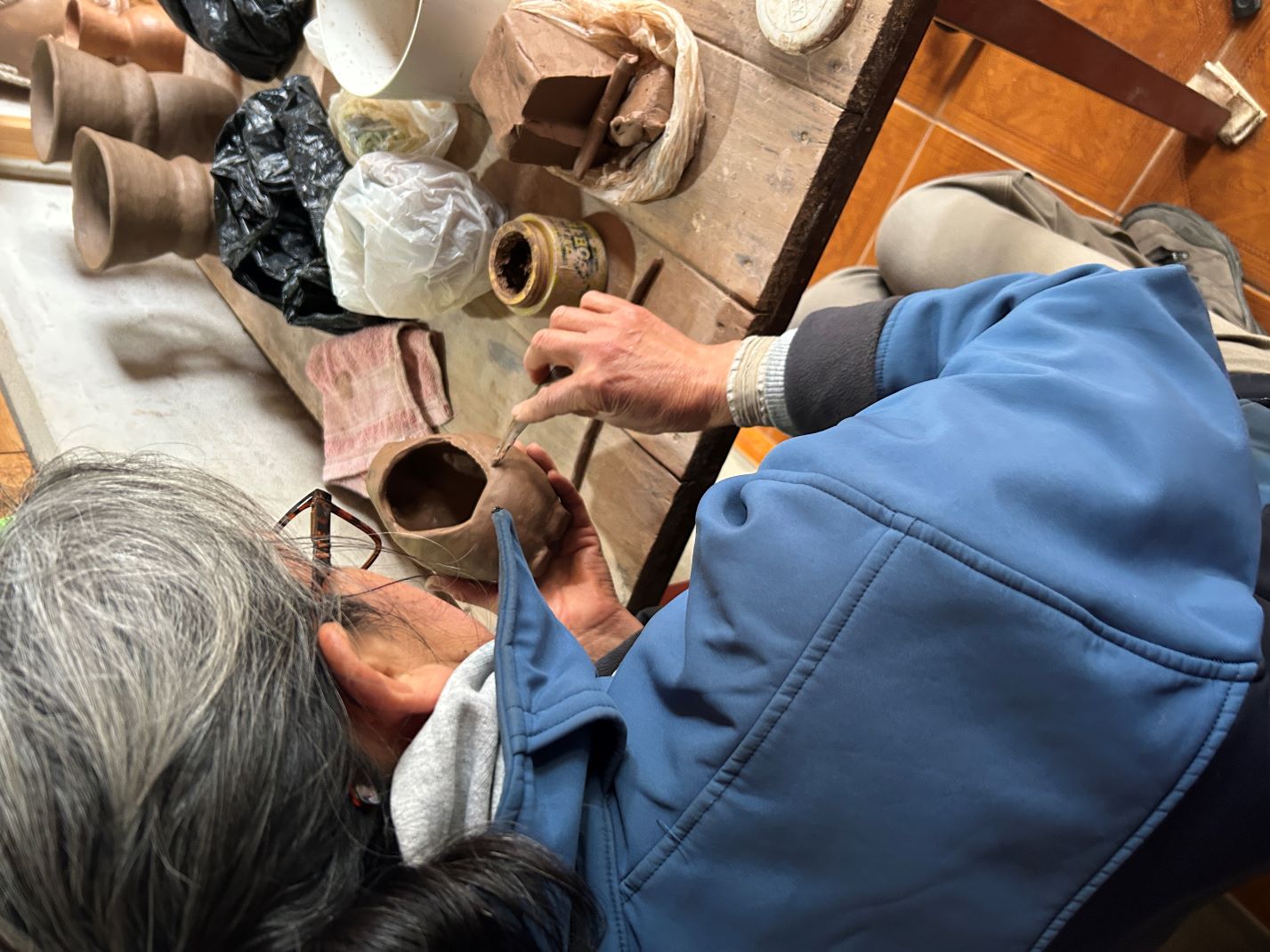
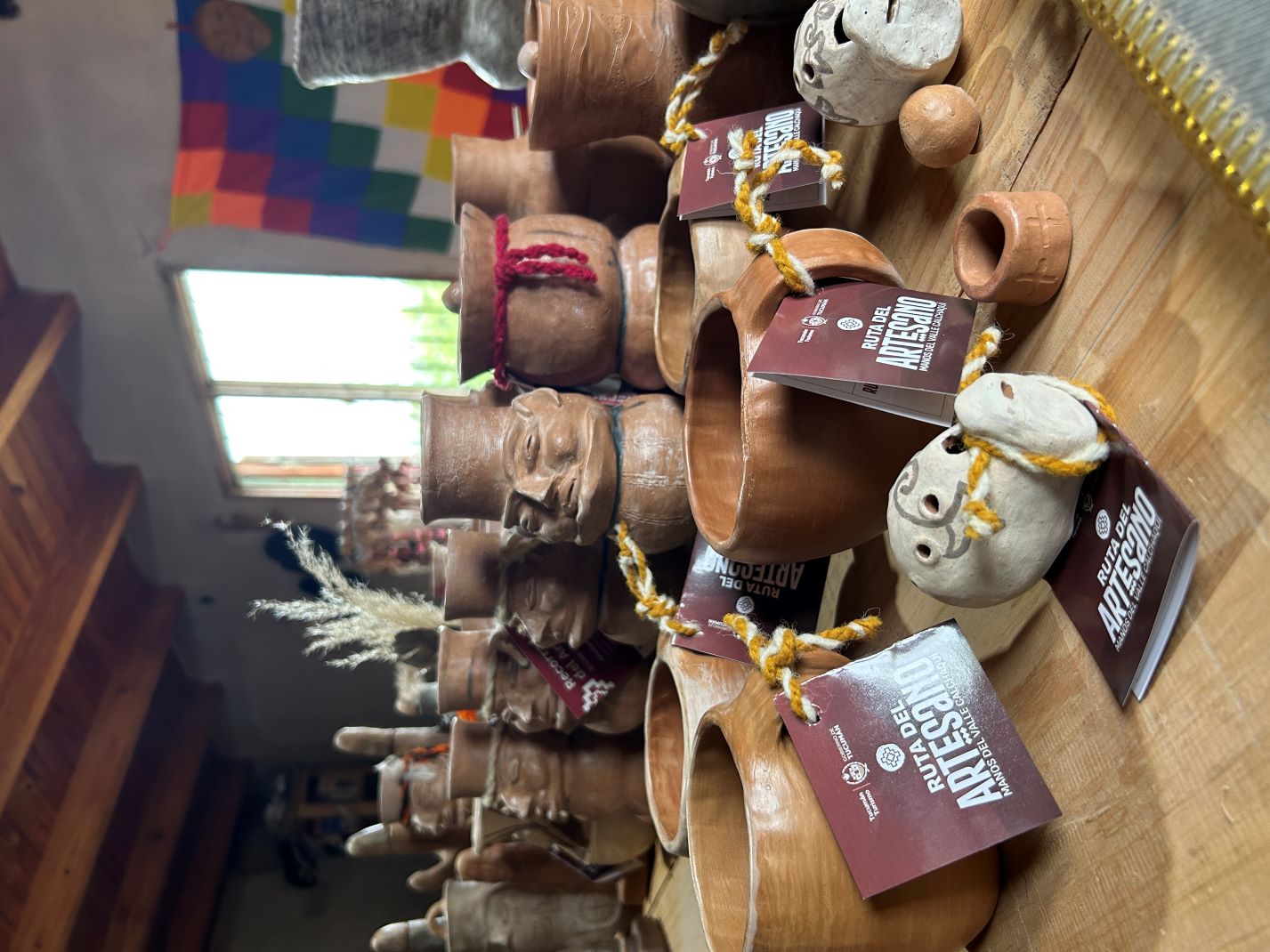
There are hands capable of creating treasures from nothing, and a living example of this is Ramona Luna, a long-time member of the Calchaquí Valley Artisan Route. Her hands have the gift of shaping clay and transforming it into pieces that preserve the deep essence of her land.
The clay—her primary raw material—arrives from its place of origin in stone form and undergoes a long process of grinding, washing, sifting, draining, drying, and kneading until it becomes a mass ready to be transformed into countless unique objects.
Those who visit her workshop often find Ramona literally "with her hands in the dough." Her palms are always covered in the clay sediment that gives life to each creation, while her focused gaze follows the birth of a new piece: funerary urns, incense burners, plates, masks, bells, small decorative animals, and many other ornaments that surprise with their detail and craftsmanship.
Modeling is the most delicate stage, as the clay is fragile and sensitive to every movement. “We know the clay is ready when it has a slight sheen,” explains Ramona as she works on a censer that will one day hold fire. Her technique consists of layering “sausages” of clay and joining them with diluted clay, a kind of natural glue. “This work is very much trial and error,” she says without looking up, while the precise moisture of the mixture determines the fate of each curve.
The drying time, she says, always depends on the weather and is done in the shade, well covered. “When it’s in the ‘leather-hard’ stage, it’s polished to give it a shine, and impressions or designs are made on it with different tools,” she explains. Once dry, the piece goes into the kiln, also made of clay. Inside, a layer of bricks is built where all the pieces are carefully arranged. Then the kiln is covered and sealed with clay to retain the heat. Only a small vent remains for the smoke and steam to escape. The fire, which starts far away, slowly advances until it envelops everything: the firing lasts between 10 and 13 hours, and the kiln remains closed for three days and three nights before revealing the final result.
“Only then can you see how the pieces turned out. Only then are they priced, because they change shape and color inside the kiln. We know they’re properly fired when they ring like a little bell,” Ramona explains. She started this craft in 2000 as a way to support her family. “This is a job that God put in my hands to get ahead, and today I feel proud of what I do and of my children.”
For her, each craft is also a cultural message. Some pieces are inspired by the Condorhuasi culture, recognizable by its black and gray tones and fine lines. Others evoke the ancient Tafí people, who represented agricultural life through symbols such as the water frog, the earth rhea, the two-headed fire snake, and the two-headed condor of the air. “People who visit my workshop come looking for that: culture, tradition. They are very drawn to the history of the valleys,” she concludes.
Those who enter her workshop don't just discover crafts: they experience a journey to the ancestral heart of Tafí del Valle.

